
Get ready for a fun introduction to kiteboarding! It typically takes 7-10 hours of lessons for beginners to become independent. We recommend taking all three lessons over the course of three or more days.
Don’t worry, throughout all of your lessons at the Kite & Wing Academy, your instructor will stay with you. We’ll make sure you fully grasp each concept before moving to the next, so you’ll learn at your own pace.
Here, we’ll cover what a typical beginner lesson looks like.
Hour 1: On the Beach (Setup, Safety & Wind Theory)
Before hitting the water, your instructor will walk you through the essential mechanics on land:
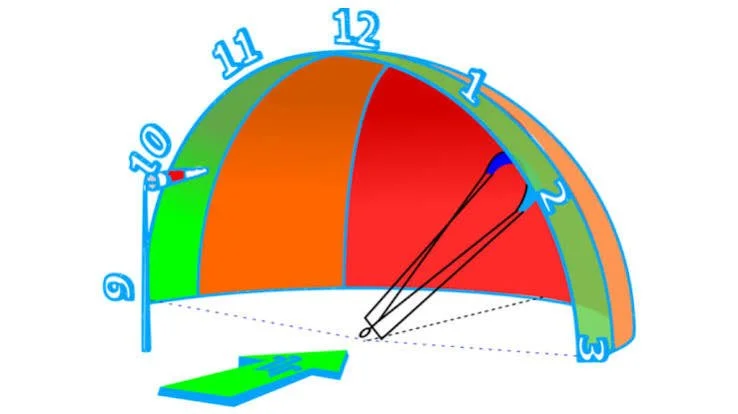
Wind Theory and The Wind Window: Learn where the wind comes from, how the kite generates power, and how to control the kite
Gear Setup and Safety Systems: Learn how to set up the kite, lines, and control bar. You’ll practice using the quick release safety system so you can depower the kite instantly. There are three steps to the safety systems; it's important to know why, how, and when you'd need to use each aspect.
First Flight Practice: With your instructor’s help, you will launch the kite and practice steering it over the water while sitting on the beach. You’ll get a feel for where the kite generates power and where the kite has less power.
Hour 2: In-Water Practice
Once you are comfortable flying the kite on land, it's time to head into the water! Your instructor will always be right by your side, connected with you directly via 2-way radio helmets.
Instructor Pilots Kite: At first, while you get into the water, your instructor will control the kite while you hold a strap on the back of their harness. This will help you understand how chop, currents, and swell affect your movement.
Student Takeover: Once you are in deeper water, you will switch places. You will fly the kite while your instructor gives live feedback and holds onto the back of your harness.
Downwind “Runs”: As you float, the wind will gently pull you downwind. You will exit the water and walk back to where you started. Your instructor will provide some tips for your next round. This is a great opportunity to ask questions.
Hour 3: Generating Power and Body Dragging
Your last hour focuses on building confidence floating in deep water while maintaining kite control.
Kite Control in the Water: Practice flying the kite while floating.
Body Drag: If you are progressing quickly and feel comfortable, you will learn to use the kite to drag your body.
Learning to body-drag is an essential skill so you can retrieve your board whenever you fall off in future sessions.
What you Realistically Will Have Learned after your 3-Hour Beginner Lesson
By the end of your 3-hour course, you will have a solid grasp of:
Wind theory and wind window
Safety systems: how and when to use them
Setting up your Kite
Kite practice on land
In-water kite practice
Powering and depowering the Kite
A new passion
What Comes Next (And Where is the Board?)
Your first lesson packs in a lot of physical and mental activity. Most students are ready for a break to let the new skills sink in.
In your 2-hour Intermediate Lesson, you will briefly review day one, practice upwind body dragging, and learn techniques to improve kite control. Depending on how quickly you progress, your instructor will introduce the board in future lessons.
Ready to Fly a Kite?
No experience is necessary, and our IKO-Certified instructors tailor every session to your pace. See how to prepare for your first lesson and what to bring, then book your first lesson with Kite and Wing Academy, and we’ll get you flying.